Connecting Cause, Community & Commerce
Kambeo is a social platform built to help connect cause, community, and commerce by bringing together nonprofits, schools, businesses, and the people who support them within a single application.

Kambeo is a social platform built to help connect cause, community, and commerce by bringing together nonprofits, schools, businesses, and the people who support them within a single application.
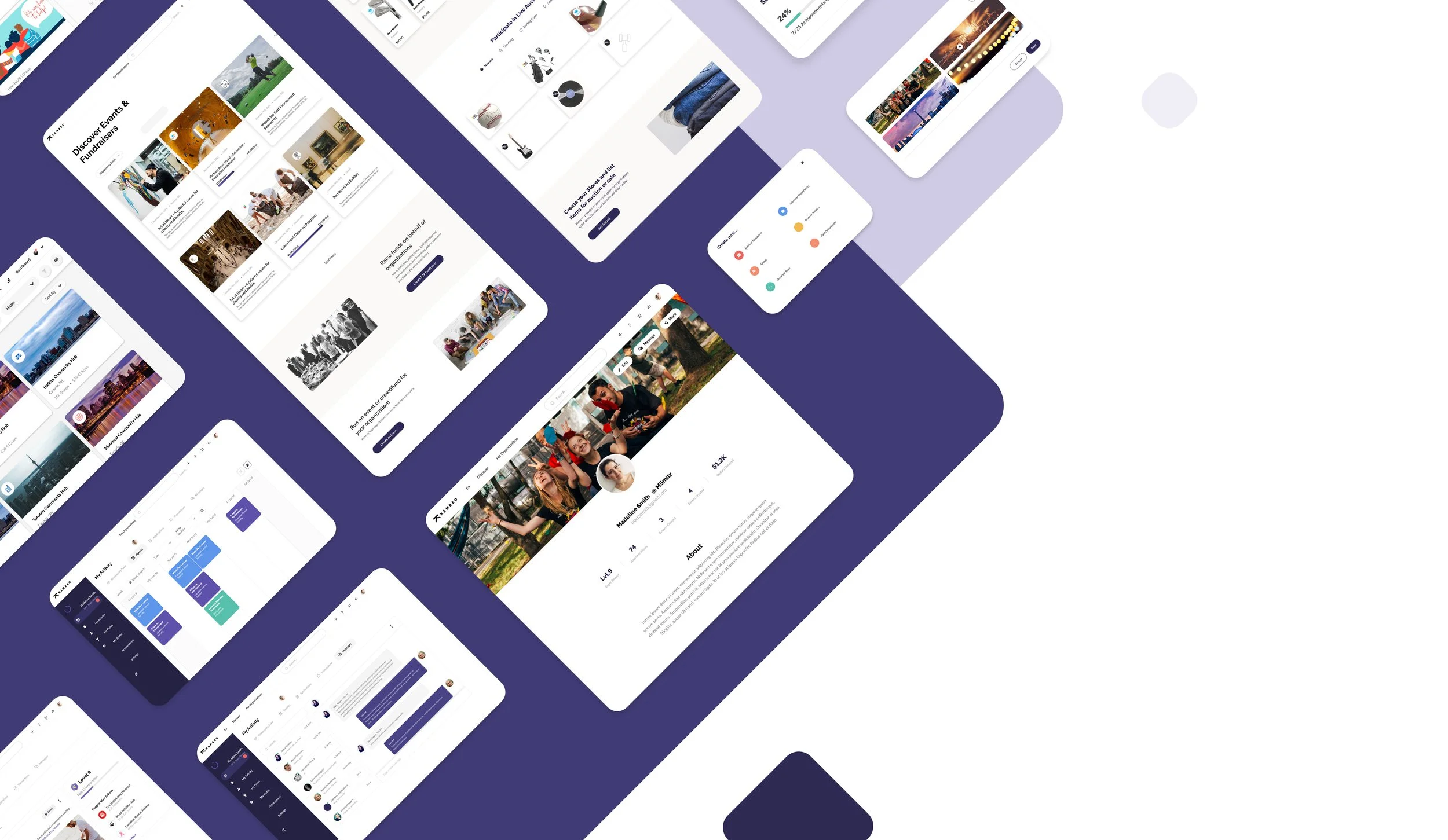
Kambeo (formerly Gigit) was seeking to improve the company look, feel & vision as they underwent a re-brand in August 2021. Part of the re-brand included giving the organization a new name (Kambeo), logo, color palette & design. The Kambeo design team was responsible for:
Company re-brand (Gigit to Kambeo)
New company website
New customer-facing application
Lead & facilitated design team meetings, stand-ups, sync-ups, review sessions etc. (design team of 3)
Responsible for final design decisions across the organization
Conducting user-research & other standard UX methodologies
Brainstorming & Ideation
Wire-framing & Prototyping
User Testing
Kambeo was a product built primarily for the b2c audience, as its core features revolved around helping school students find volunteer work. After a slight change in the business model, Kambeo plans to put more focus into providing opportunities for organizations & businesses in attempt to generate more revenue.
This left the Kambeo design team with their first challenge. Who are Kambeo’s primary users? We interviewed a few internal employees who were experts in the non-profit space. We picked their brains and put together a few persona profiles to help us build a deeper understanding.
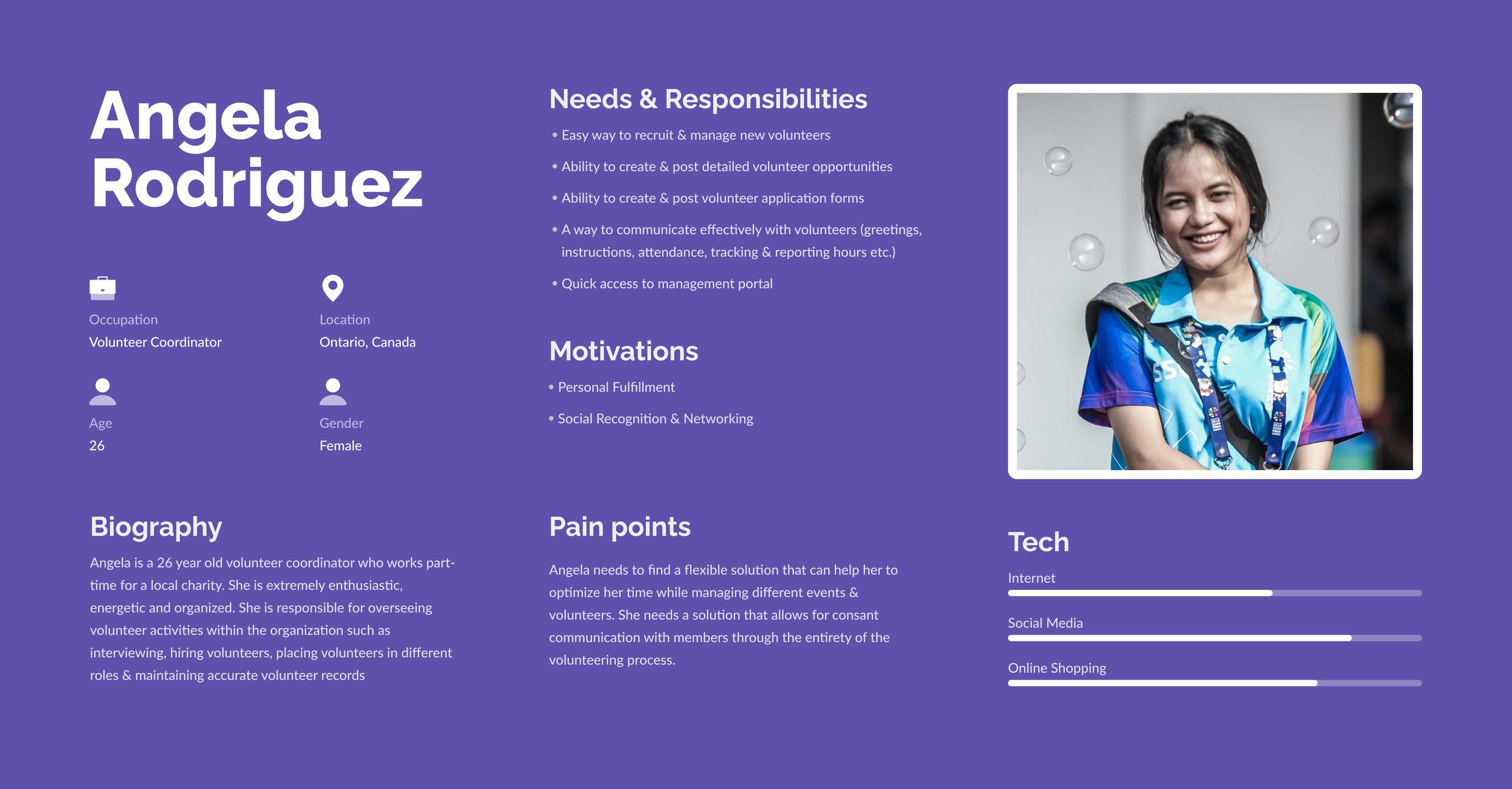
Volunteer Student Persona (b2c user)
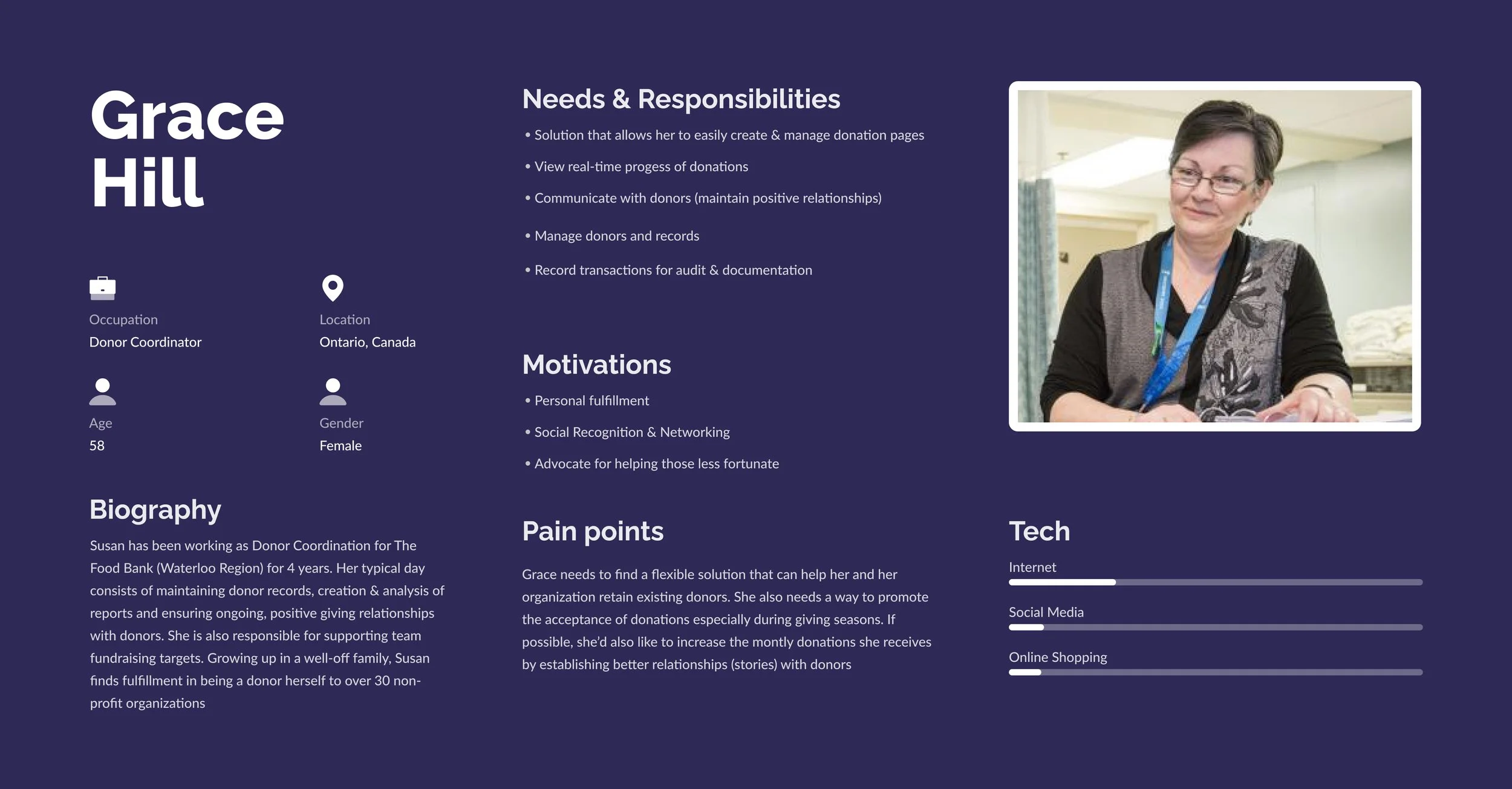
Donor Coordinator Persona (b2b user)
By using insights generated from the research phase, the team quickly realized that both user-types have a different set of goals, motivations and pain points. We used this information to begin structuring the platform in a way that made most sense. The two main parts of our platform were separated into Discovery (b2c) & Management (b2b).
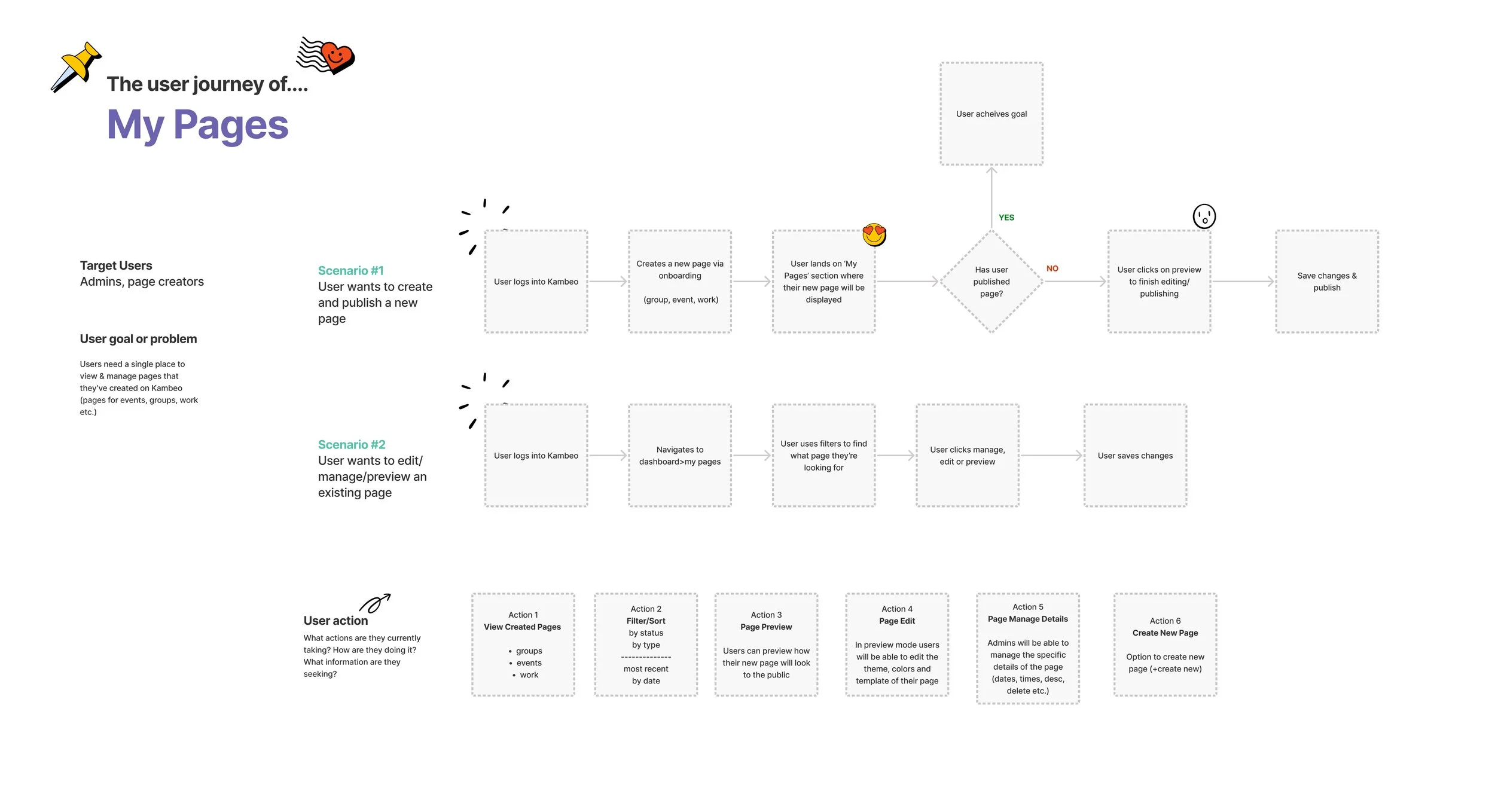
For each of the sections in our site-map we created user-journey maps to understand how they would likely navigate through each interaction. Points of frustration were acknowledged and flagged as we attempted to find solutions to help make the experience more frictionless.
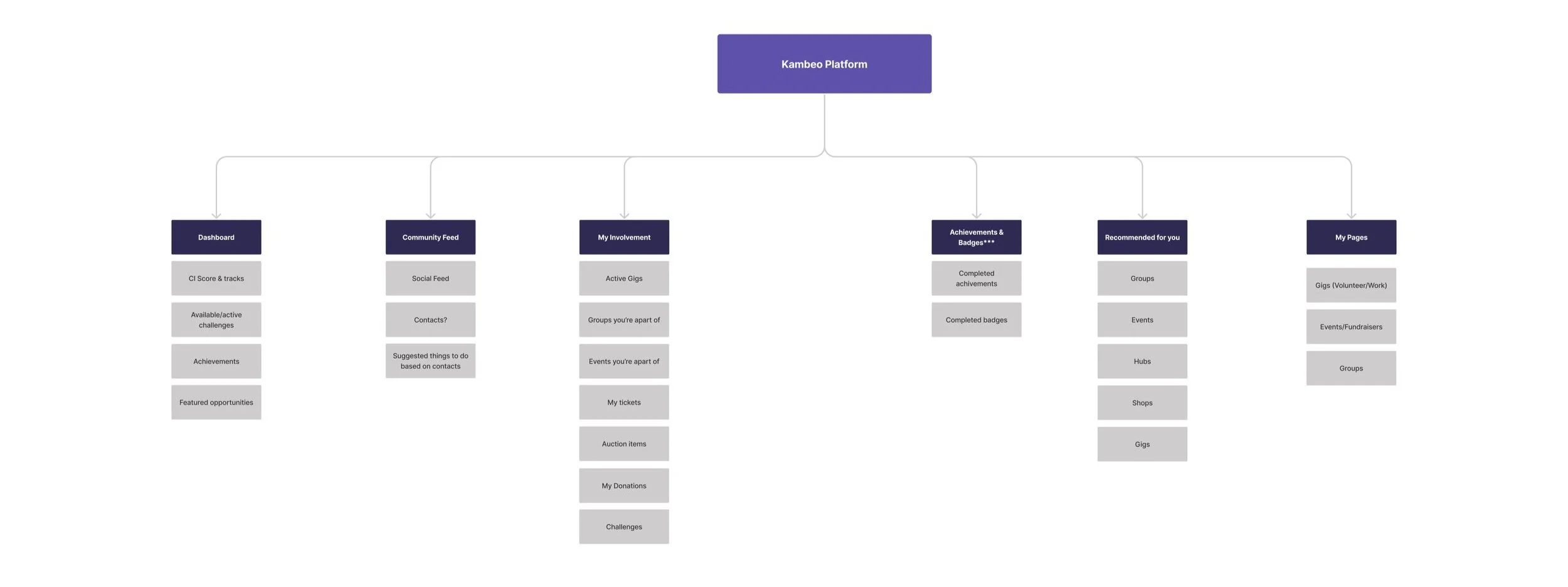
A site-map was created to organize all of sections of the platform. Card-sorting activities were completed by each of the designers to help us come to a consensus on what content belonged to each section.
Wireframes were mocked up for each of the product/feature requirements. The wireframes were created digitally using minimal UI fidelity to ensure we focused on the functional design and less focus on visual elements.
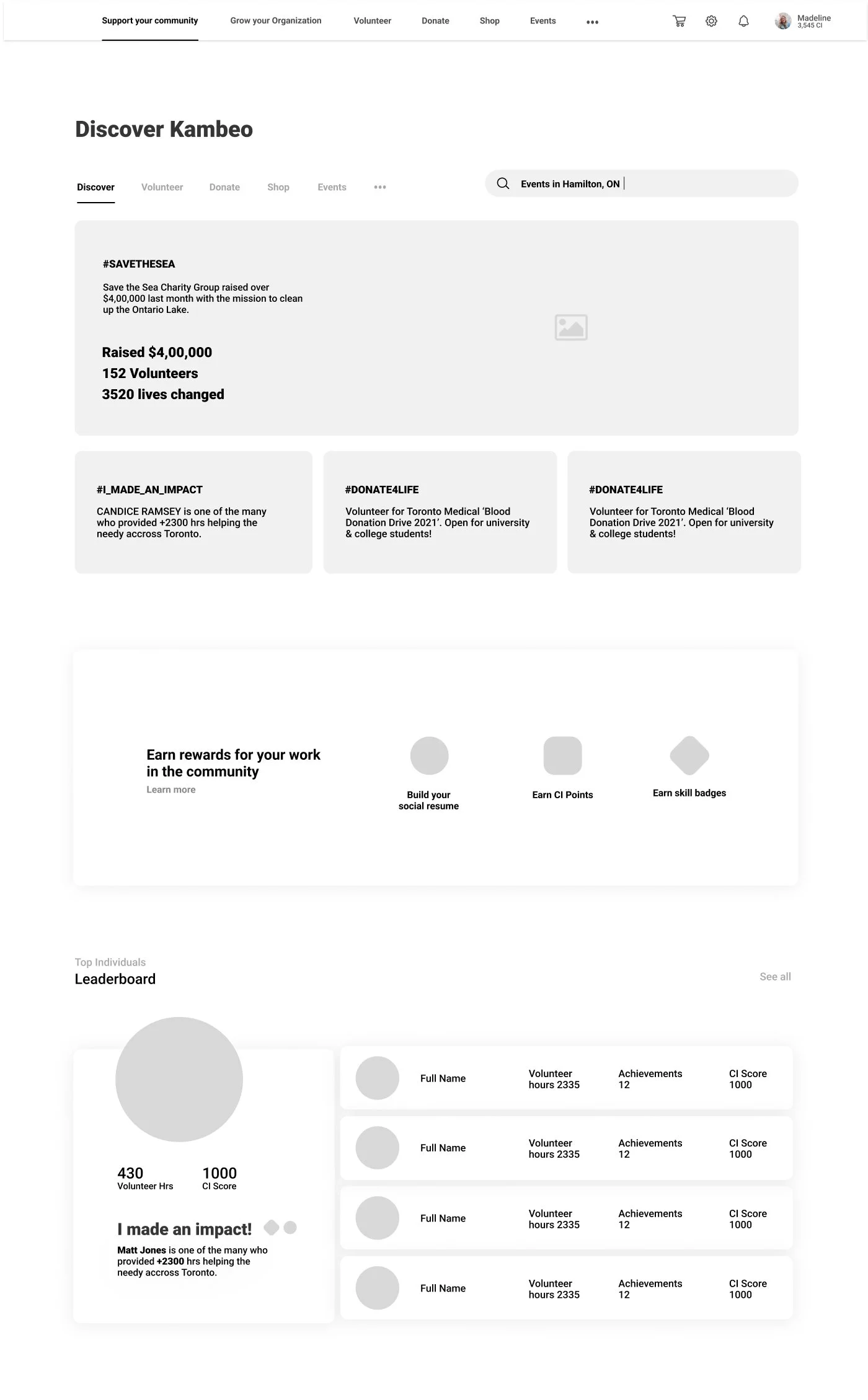
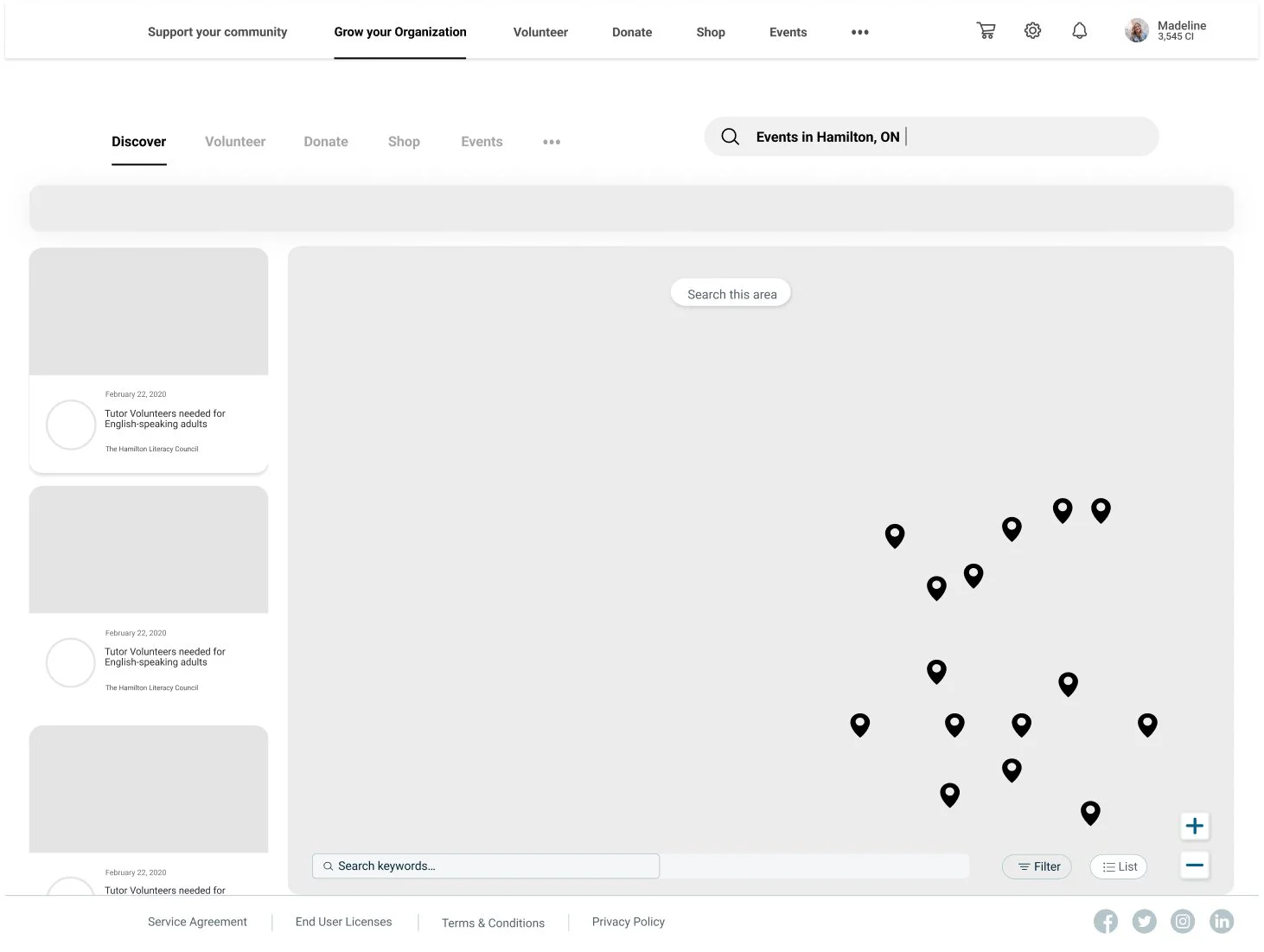
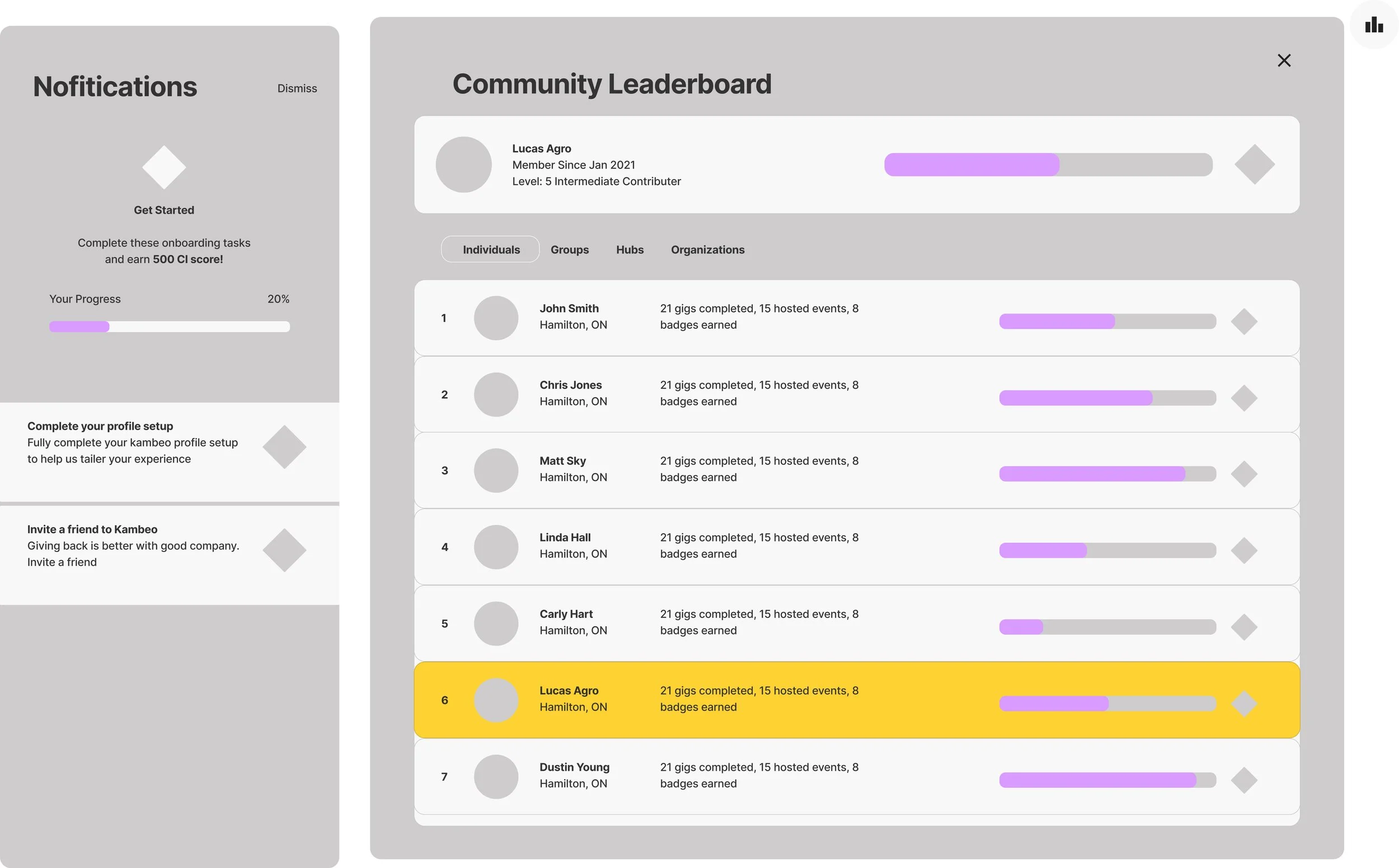
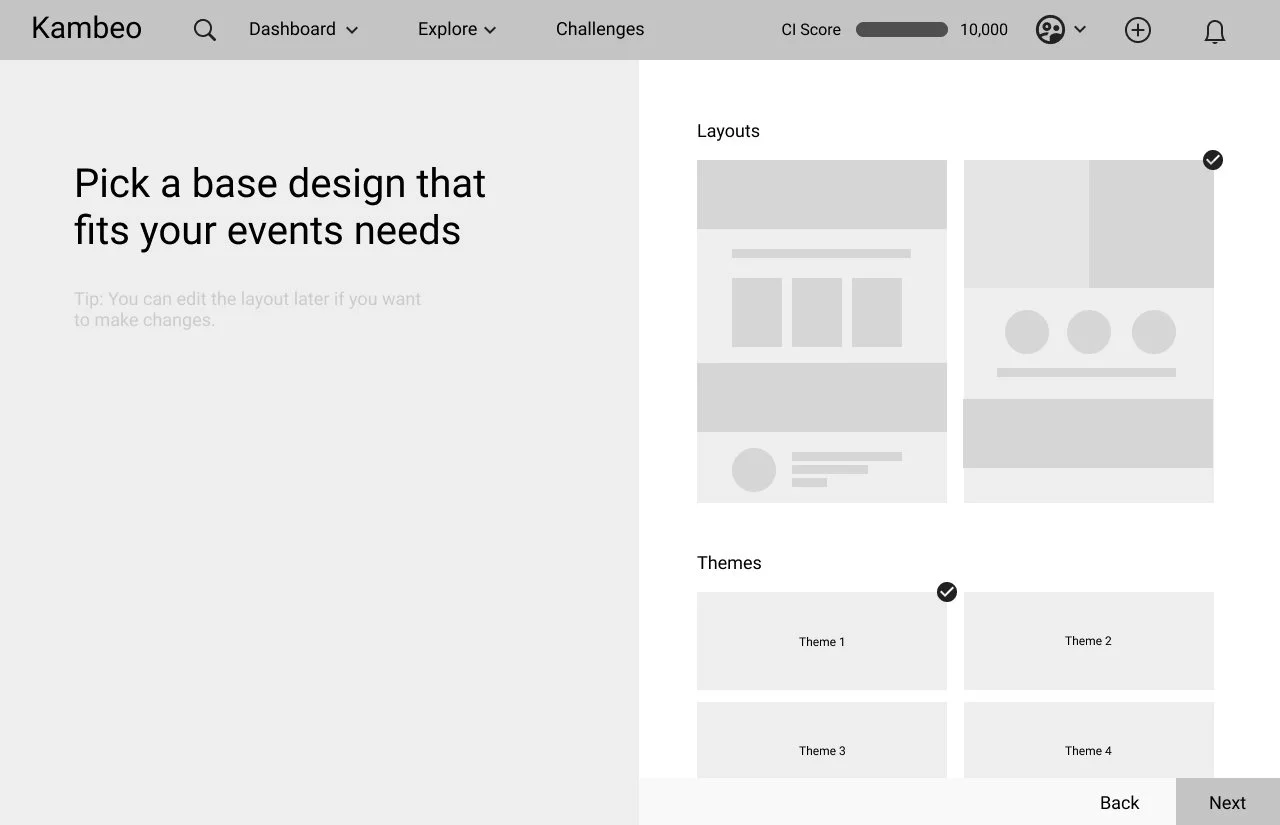
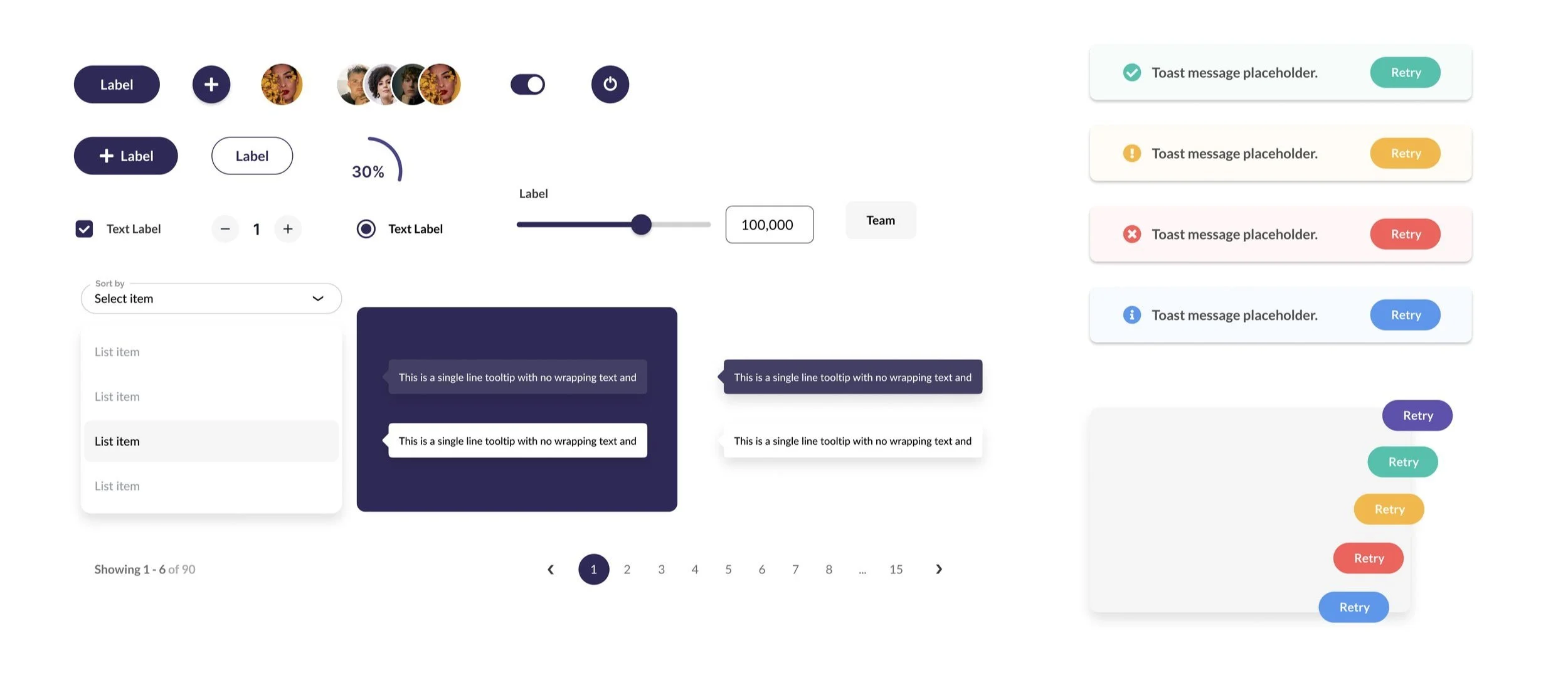
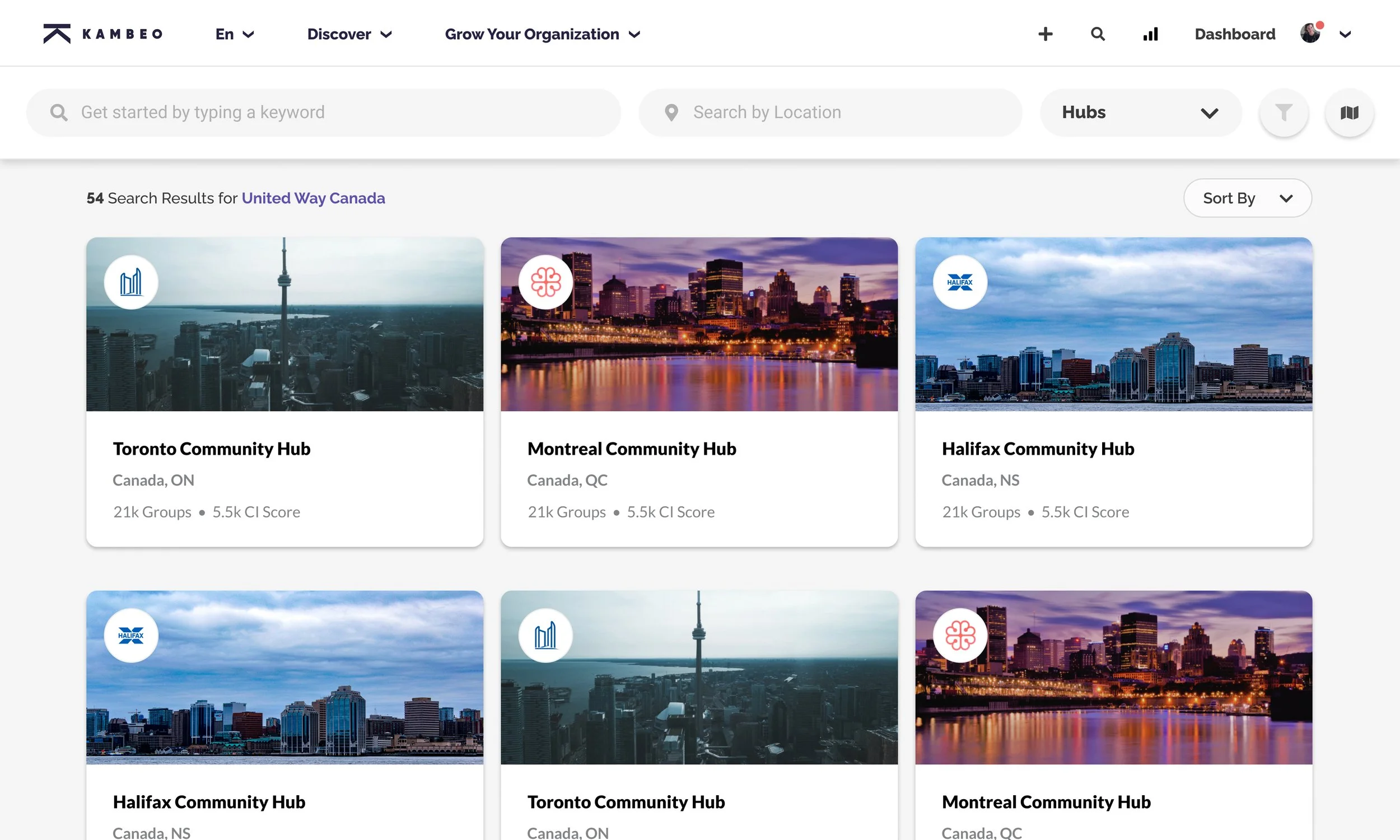
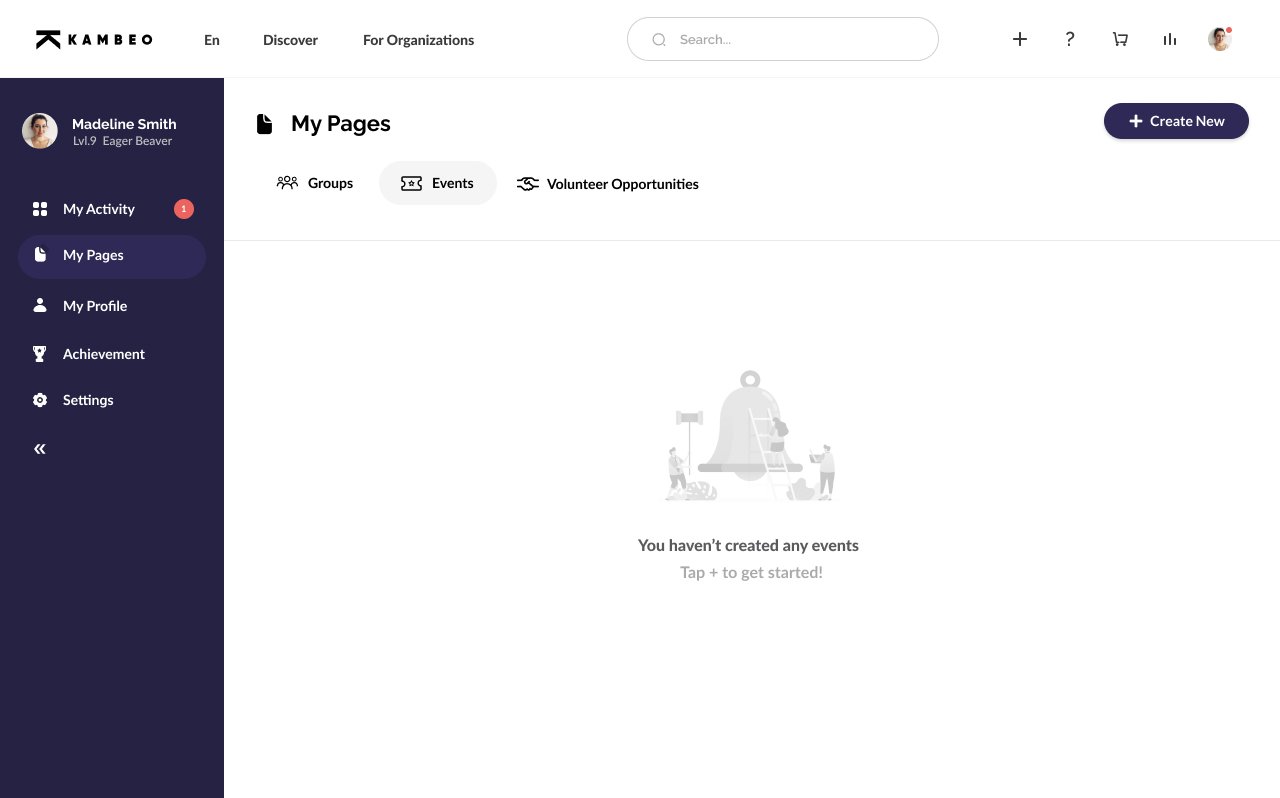
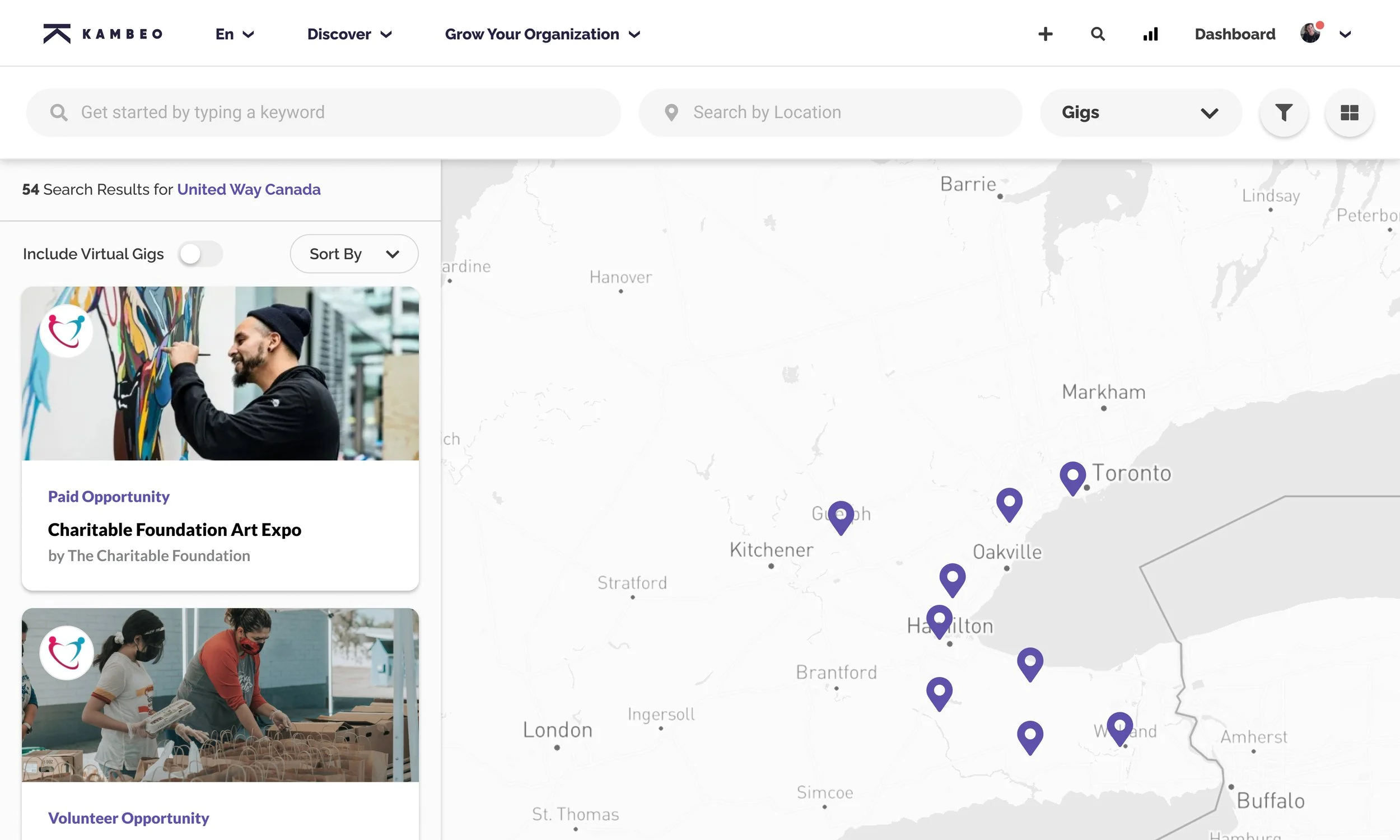
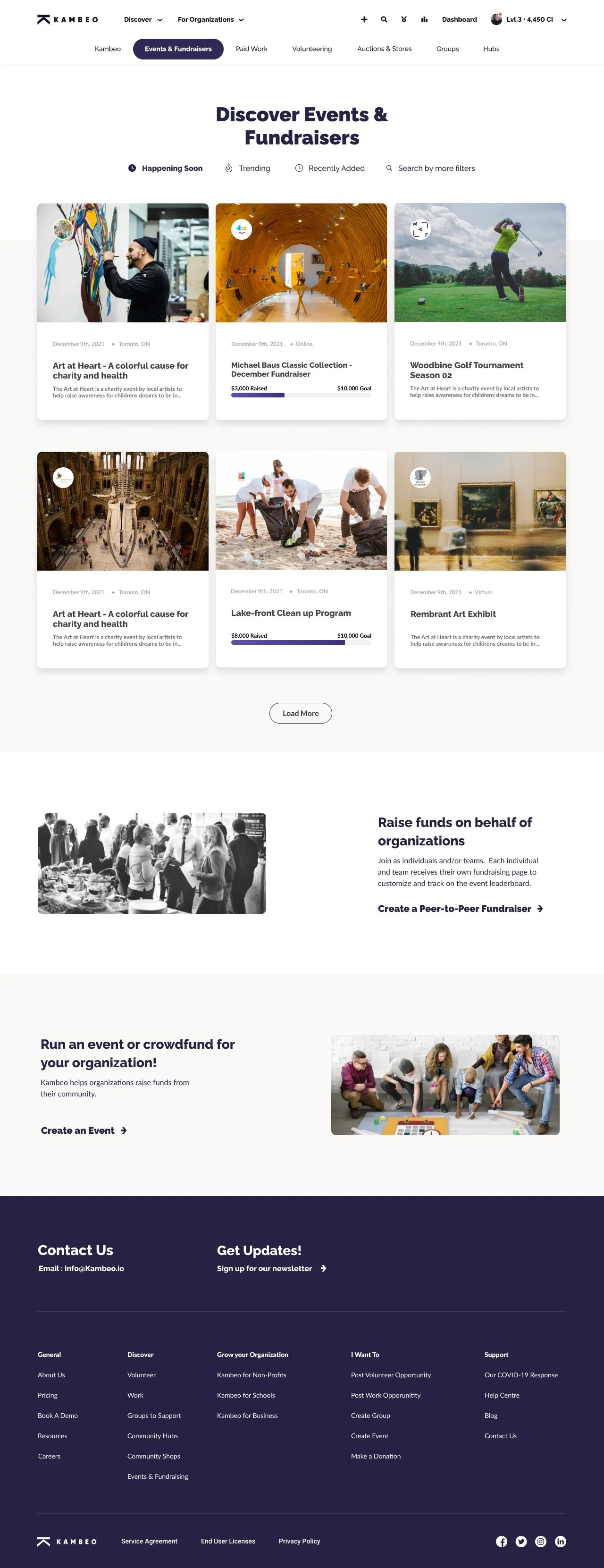
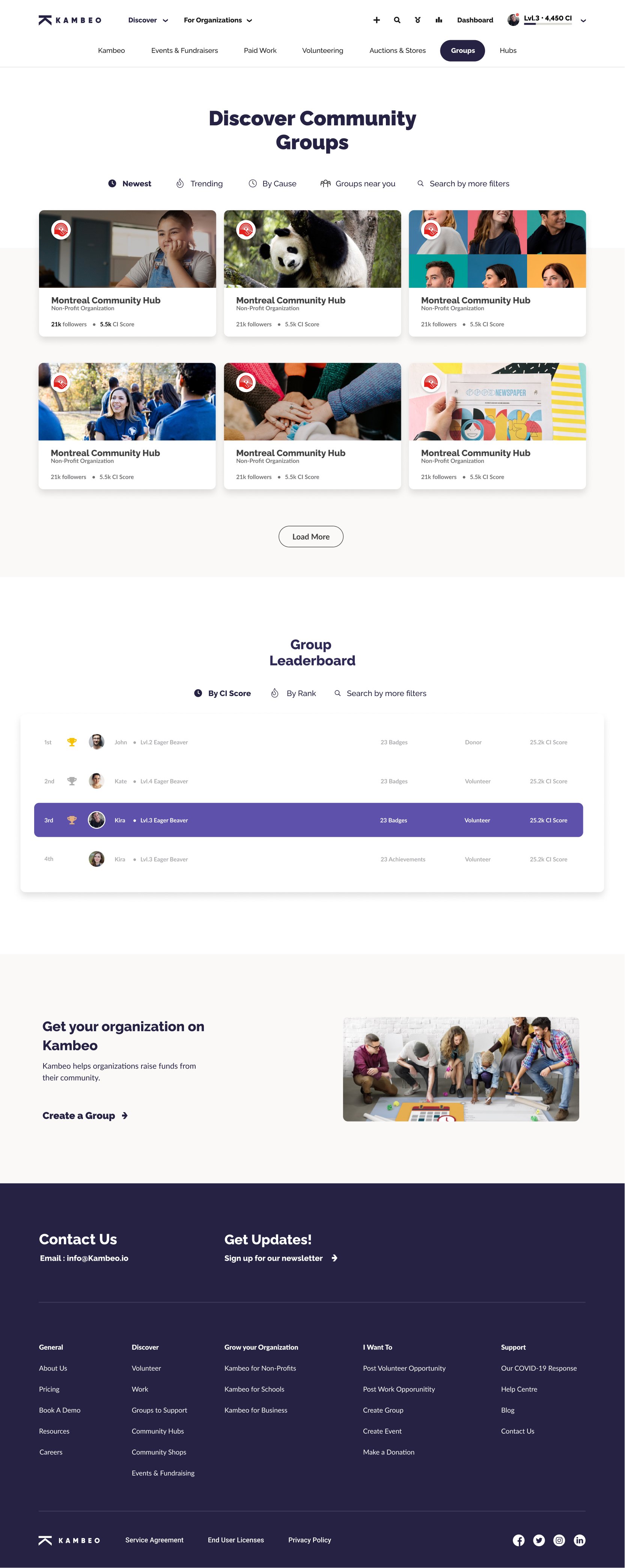
All screens were designed to be responsive to fit all screen sizes. Material design principles were applied to ensure optimal user-experience.
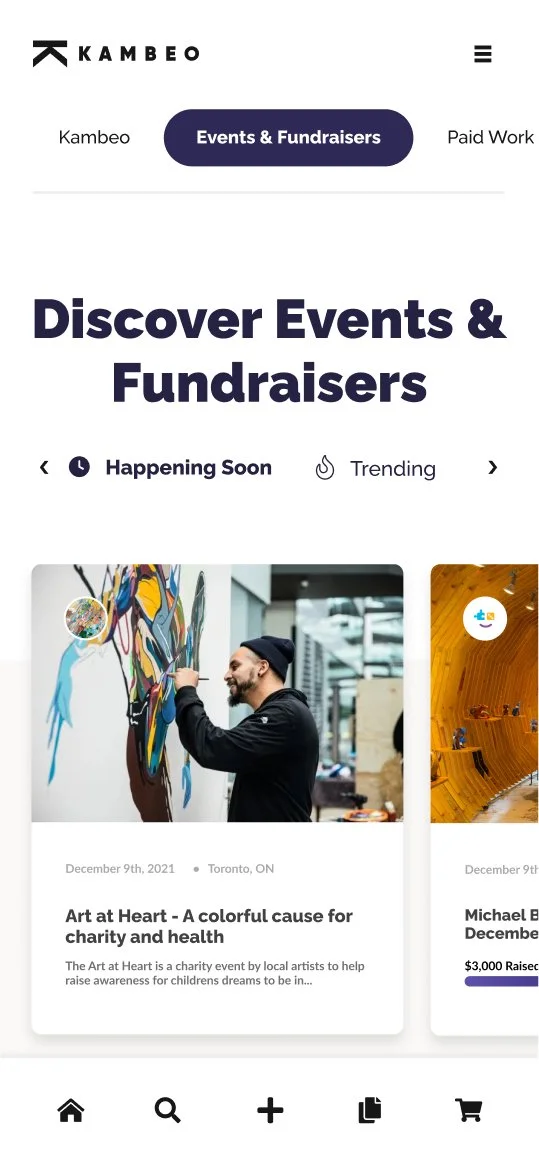
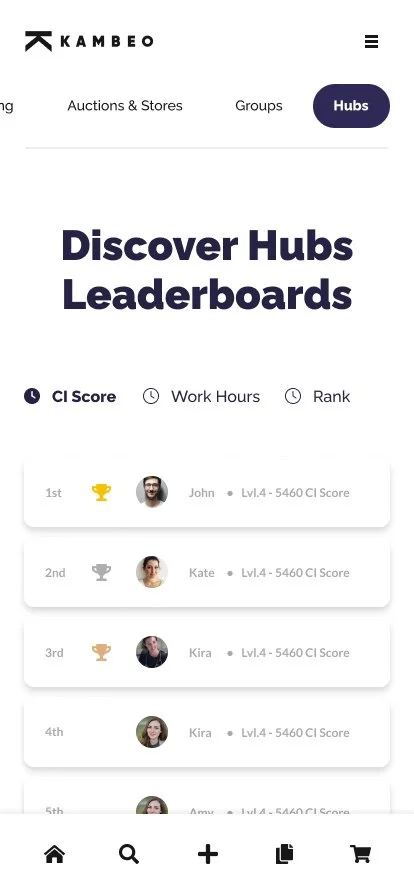
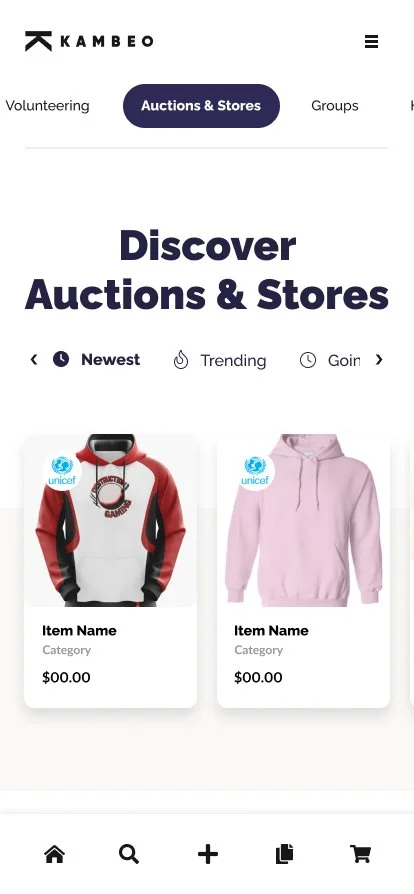
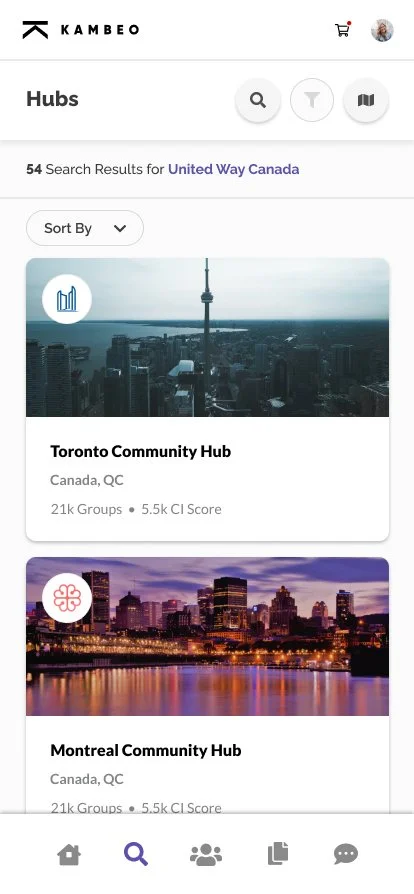
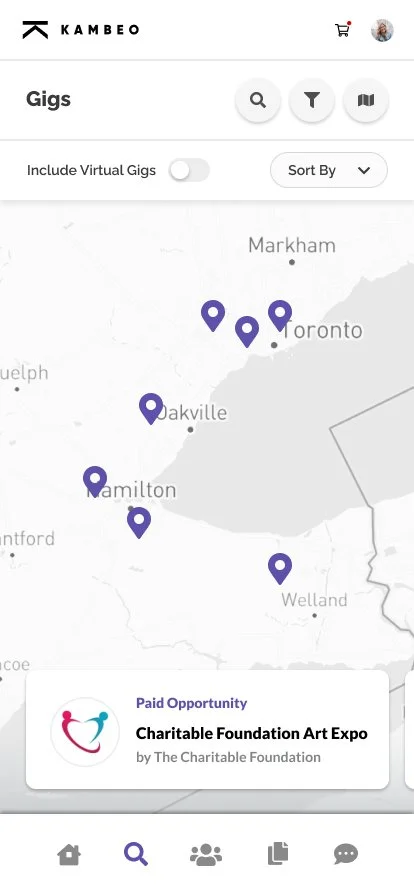
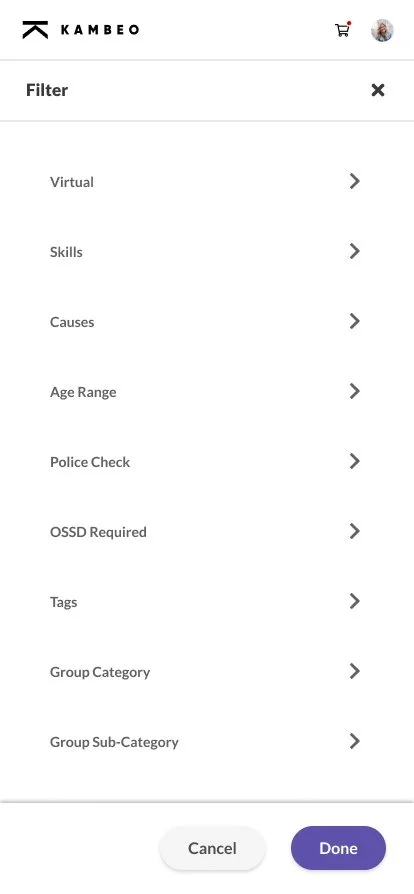
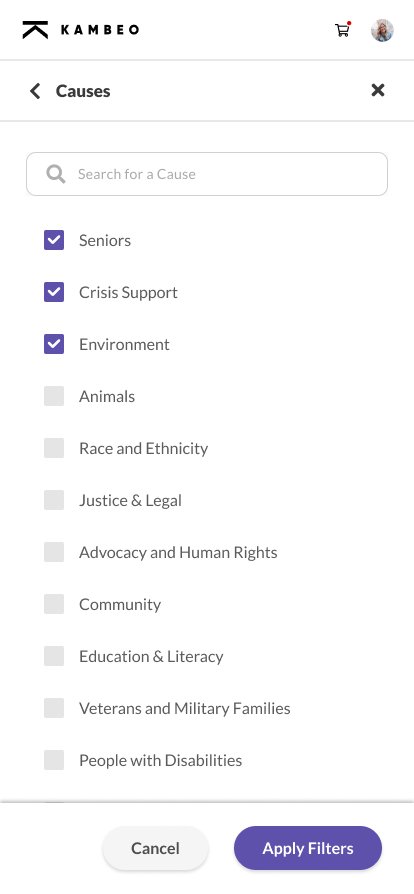
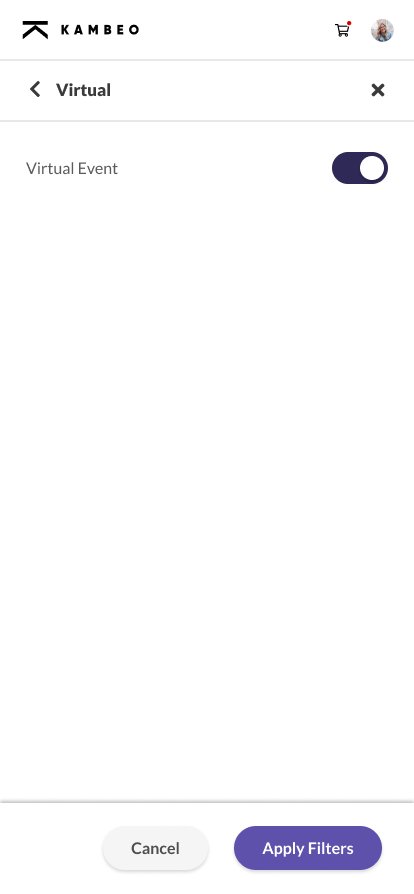
We were able to satisfy the needs of both individual and organization user by redesigning our main menu. We understood that the Kambeo website would likely serve as the initial entry-point for most users, and that having access points to a variety of channels would be the best possible solution.
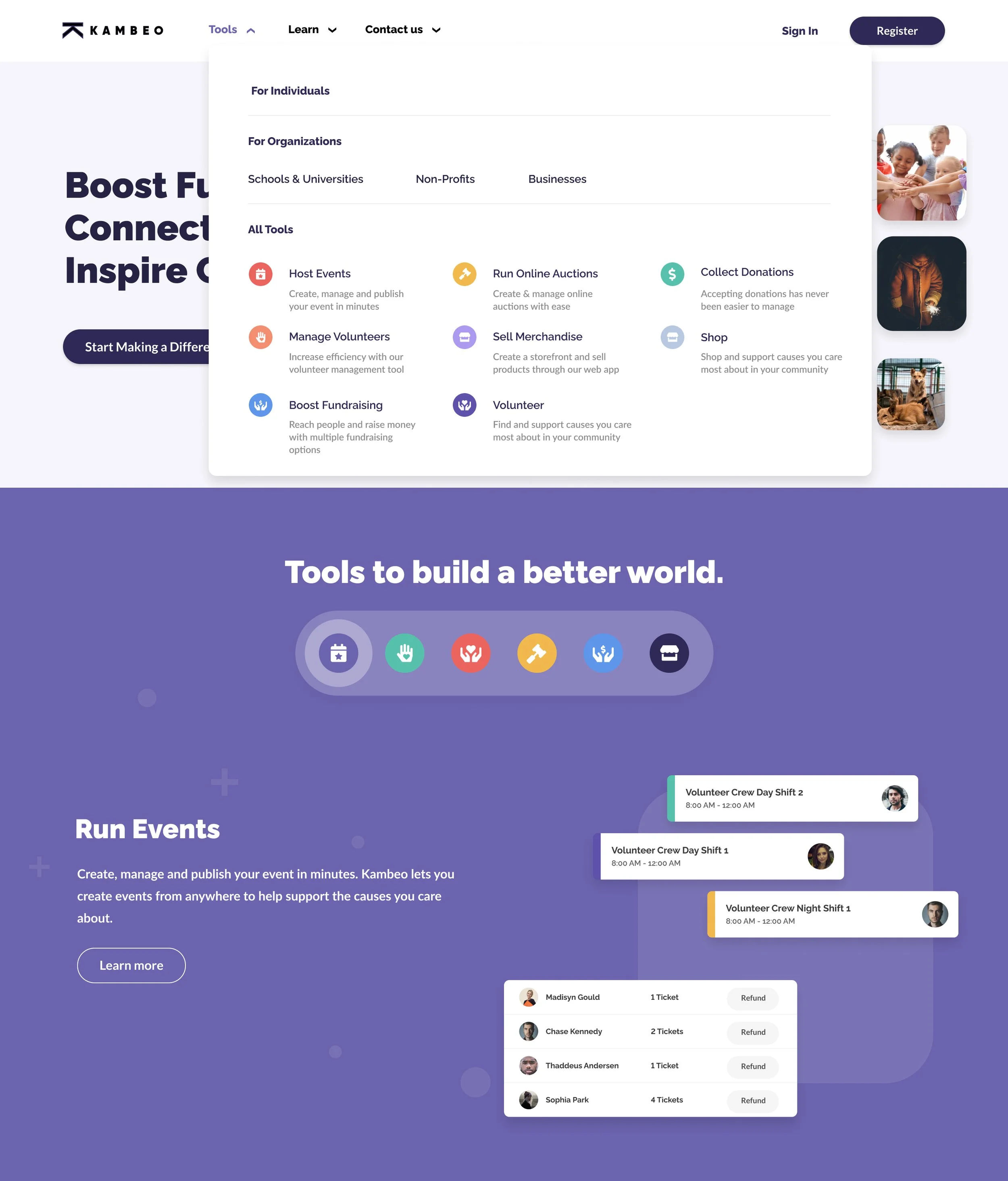
Users are now able to access their preferred experience by clicking either ‘For Individual’ or ‘For Organization’, or they can continue to browse ‘All Tools’ if they’re looking to explore
Always prioritize user research and user-testing (No matter how tight deadlines are)
Its not called user-experience for nothing. During my time at Kambeo, our design team didn’t spend enough time reaching out and observing real users. Although we did as much as we could given the resources of a small start-up, some of our solutions were based on assumptions.
Build great relationships with members of cross-functional teams. They may be able to help :)
As designers its easy to think that only design professionals hold the answers to difficult design-related problems. During my time at Kambeo, I realized that collaborating with different members of different teams can help give you a different perspective and sometimes help connect the dots you didn’t initially see for yourself.
Use a design system. It will save you loads of time & effort!
Creating a design system (collection of reusable design components & guidelines) is the single-most important aspect when it comes to consistency & efficiency in design. Design systems are most effective when working with multiple team members that share similar design elements. As soon as my team at Kambeo put together out design system, designing became a matter of mixing and matching already-made components.